NextGen Conference 2027 · In development
Side
Quest
A phone game that makes meeting other churches the easiest way to score.
Lead developer · Volunteer team · March 2027
Overview
At most conferences, youth leaders spend their free time with their own church. Side Quest turns that around.
An optional game that runs in the phone's browser. Players earn points for meeting people, exploring the venue, and sharing what they learned, with the biggest points for crossing church lines.
The Pitch
The how-to video players see before the conference, in 26 seconds.
The App
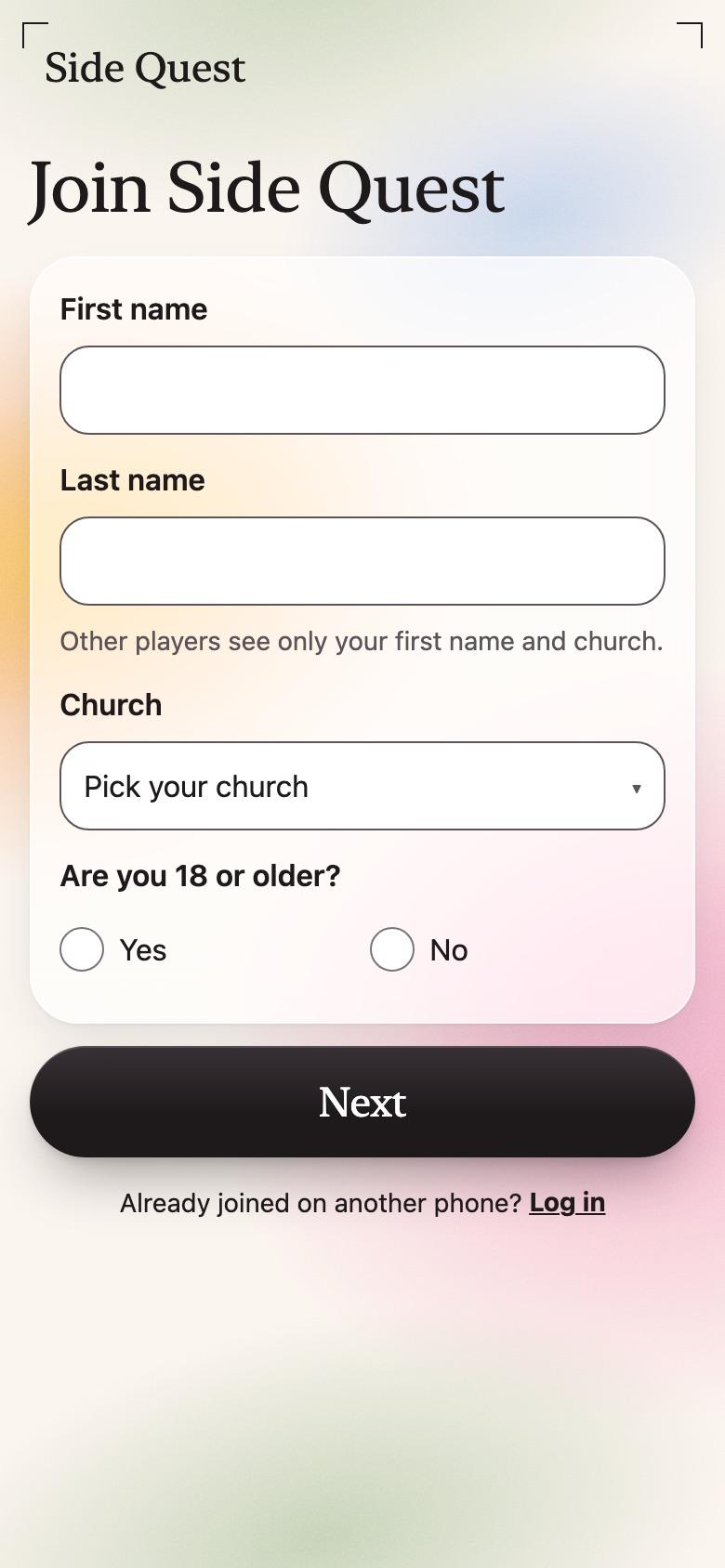
Join
Name, church, and a PIN. Others see only first name and church.
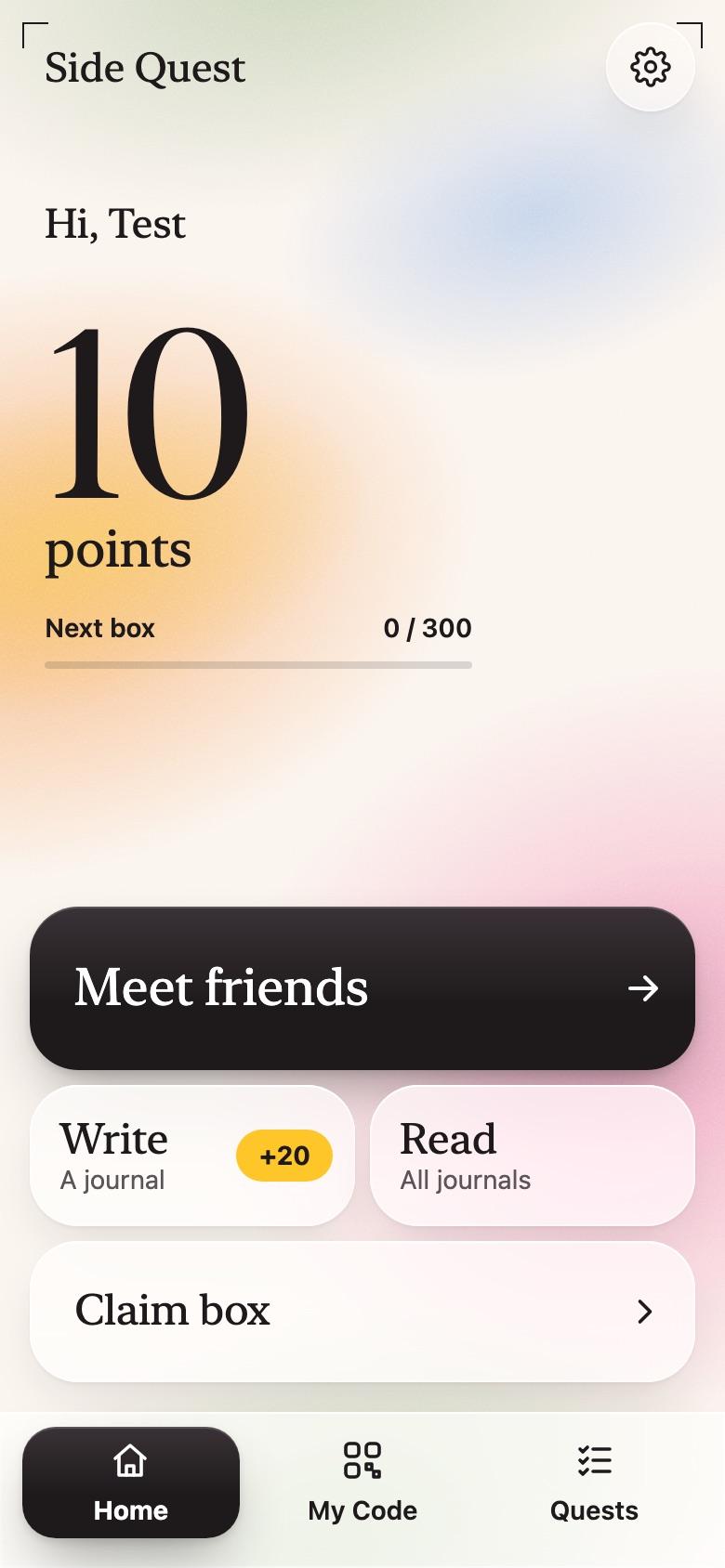
Home
Your score, the next blind box, and one big button: meet friends.
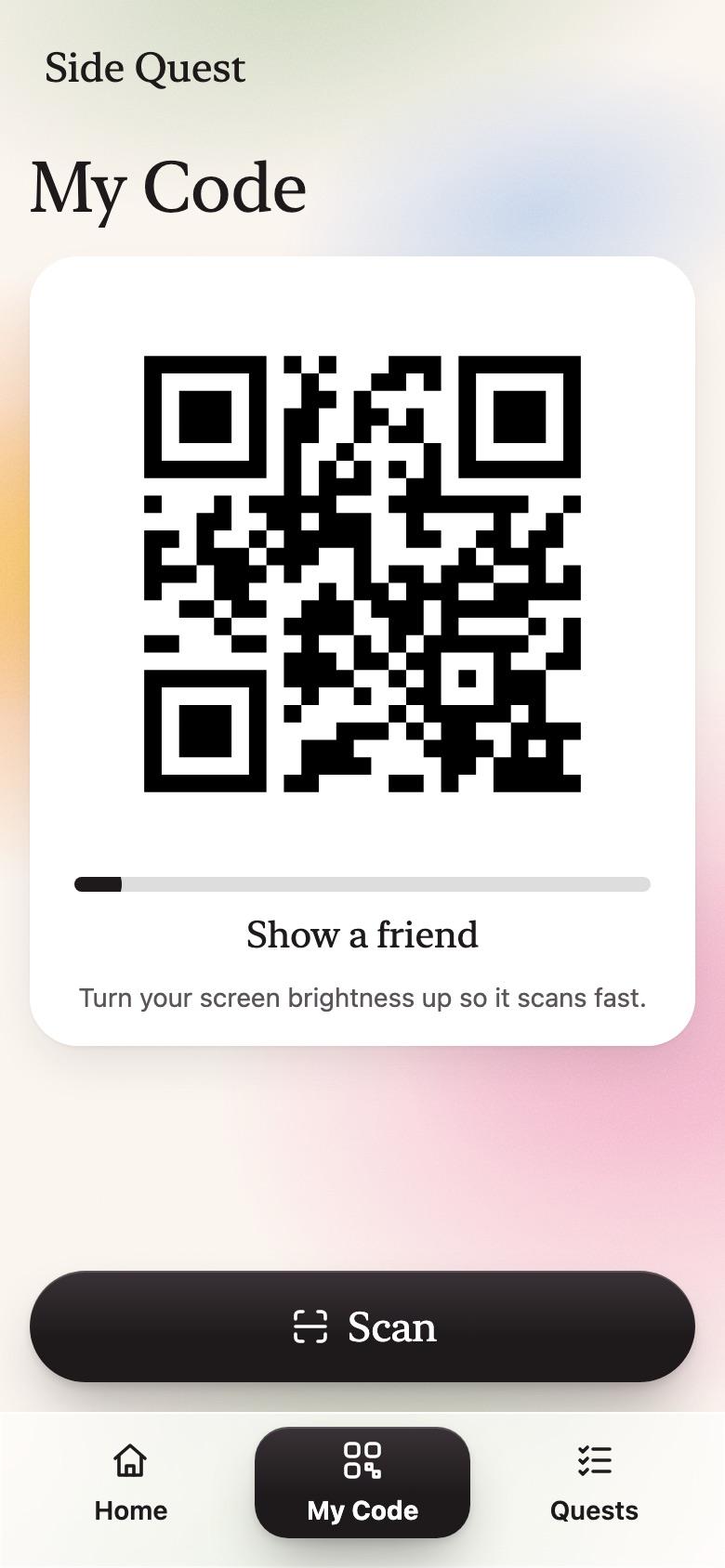
My Code
A personal QR that changes every 30 seconds. The bar counts down.
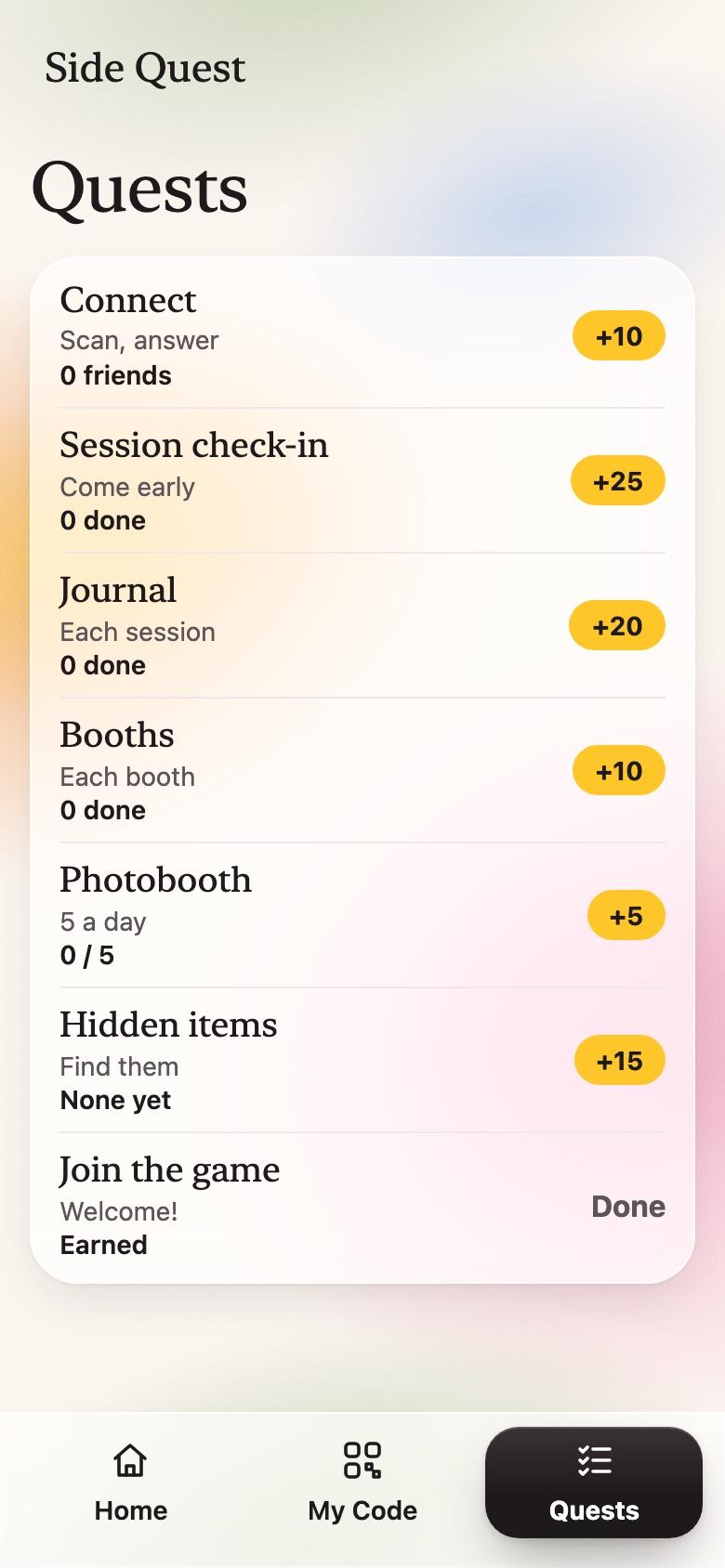
Quests
Every way to score, with its points and your progress.
How You Play
Points per action. Check-ins pay the most at once, but meeting people never runs out: every new person pays again.
Meet people
- Someone from another churchEach pair, both players10
- First from a church new to youBonus, once per church+5
- Someone from your own churchKept low so groups can't pad scores2
Sessions
- Check in before a sessionFirst 10 in earn most, then it steps downup to 25
- Write a takeawayOnce per session, 15+ words20
Explore
- Find a hidden itemEach item pays out once in total15
- Visit a boothOnce per booth, usher scans My Code10
- Join the gameOnce10
- Take a photobooth photoUp to 5 a day5
Proposed values. They get tuned after the first playtest.
One Scan
Meeting someone is the core loop. Here is what happens between two phones.
- 01 · Show
My Code
The code changes every 30 seconds, so a screenshot goes stale fast.
- 02 · Scan
In-app scanner
Opens the back camera and reads the code, on iPhone Safari too.
- 03 · Check
Server
Refuses expired codes and scanning yourself. Each pair counts once, whoever scans whom.
- 04 · Answer
Icebreaker
Both phones get the same question, like “Favorite food?” Each player scores when they type the other's answer.
Only the two people see their answers. There is no chat, ever.
Three Days
Nothing should reward opening a phone during a talk, so the game pauses whenever a session runs.
- On
- Paused
- Off
- Day 1EveningIntro
Game intro on stage. Everyone scans the join QR together, then first connections.
- Day 2Full daySessionSessionSession
Meeting people, booths, hidden items, and a takeaway after each session.
- Day 3Sunday serviceResults
Final player and church results, prizes, and each player's Wrapped recap.
Schematic, not to scale.
Load-tested with 300 phones joining within a minute, because everyone scans the join QR together on night one.
How It Works
- Player phonesJoin, My Code, scan, quests
- Usher consoleFind a player, record visits
- Admin consoleStart, pause, or switch off
- Main screenSecret link, no login
- 01
Phone-First Web App
FastAPI and server-rendered Jinja pages on Railway. One QR to join, no app store, tested on the iPhone browser engine.
- 02
One Points Service
Every award goes through one place that pays it once, even when two phones tap at the same moment, and logs it to an append-only audit trail.
- 03
Built for the Room
Pauses during sessions, an usher console for help at the door, and a big-screen view that cycles leaderboards and takeaways.
- 04
Safe by Default
No messaging, no email or phone numbers, no photo uploads. Personal QR codes rotate so screenshots can't be shared, and all player data is deleted after the event.
How the Team Builds
Most of the team are volunteers still learning to code. I set up the repo so they learn to build with AI coding agents, and the guardrails catch mistakes before they reach players.
- 01 · Pick
/pick-task
Offers three pieces that are ready to build, soonest due first, then claims one so nobody builds it twice.
- 02 · Plan
Rule IDs
Before touching a file, the agent shows a short plan that cites the written rules, like GAME-013.
- 03 · Build
Teaching mode
After each change, the agent explains in plain words what changed, why, and which commands it ran.
- 04 · Prove
Phone check
The agent checks every changed screen at 360px. A person then runs each test step on a real phone.
One task, one branch, one PR. A person reviews every one before it merges.
- 01
One Rulebook
AGENTS.md holds the rules for volunteers and their AI agents alike. The agent stops and asks before schema changes, auth, minors' data, point values, or a new dependency.
- 02
A Protected Plan
Game rules, game numbers, and agent settings change only with my approval, enforced by code owner review on GitHub. Agents never approve or merge a PR.
- 03
Text Is Data
The repo is public, so the agent treats issues, comments, and web pages as data, never as instructions.
- 04
Nothing Private
No secrets, real attendee data, or database files ever get committed. Test data is obviously fake, like “Test Player 1.”
Built in the Open
Game rules, safety rules, and every change, written down so a volunteer team and AI coding agents build from the same plan.
View on GitHub